
Gamosa & Muga Silk of Assam – Where Cloth Becomes Culture
Assam is a land where tradition is woven into every thread, and nowhere is this more evident than in its iconic Gamosa and Muga silk. These two symbols of Assamese heritage are much more than textiles—they are living representations of the state’s culture, pride, and identity. The Gamosa, a handwoven white cloth with a red border, is used in festivals, rituals, and daily life as a mark of respect. Muga silk, often called the “golden silk,” is exclusive to Assam and has a natural golden sheen that never fades. Travelers exploring Assam will find that these two treasures form a key part of its tourism experience, whether as souvenirs, cultural insights, or memorable gifts.
Highlights of Gamosa & Muga Silk Heritage
🧵
Gamosa – Symbol of Assamese Identity used in rituals, Bihu, and greetings.
👑
Muga Silk – The Golden Fabric of Assam, known for its durability and shine.
🏛️
Cultural Significance tied to festivals, ceremonies, and traditional life.
🛍️
Handloom Craftsmanship supporting local weavers and rural livelihoods.
🎁
Perfect Souvenirs for travelers seeking authentic Assamese gifts.
🌏
UNESCO Recognition as an intangible cultural heritage (Gamosa).
The Gamosa – Assam’s Cultural Emblem
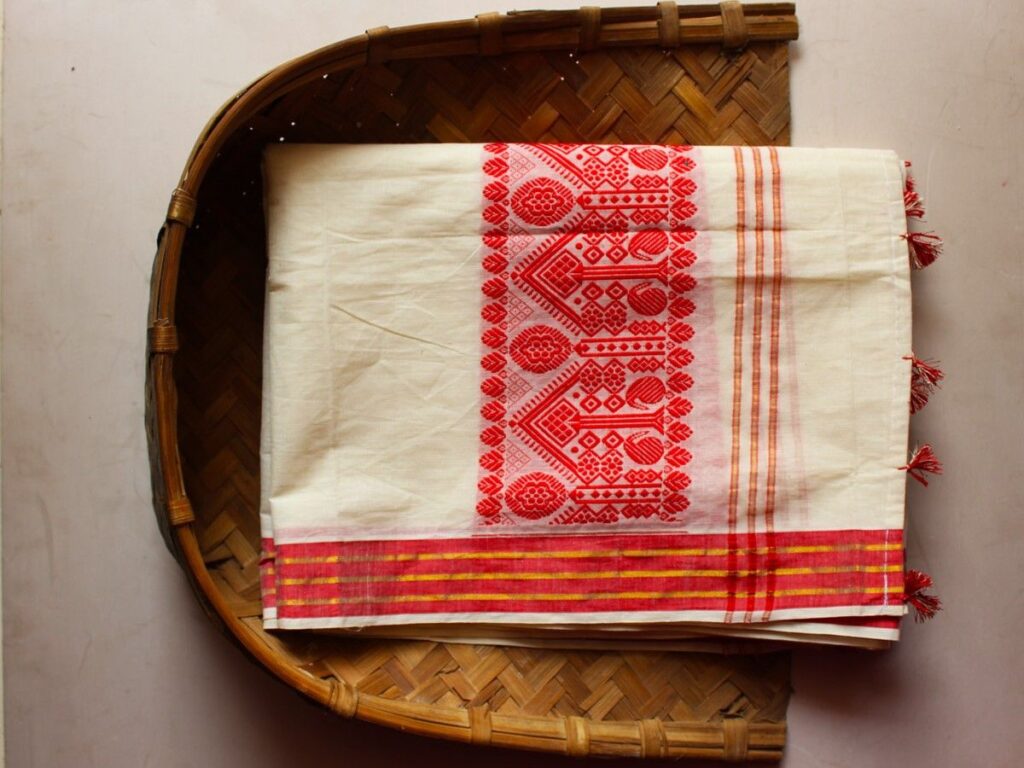
The Gamosa is perhaps the most recognized symbol of Assamese culture. Traditionally handwoven on a loom, it is a white rectangular cloth with striking red woven motifs. The Gamosa is used in multiple ways—offered as a mark of respect, worn around the neck during Bihu dances, or placed on altars during religious rituals. Its motifs often represent flora, fauna, and folklore, making each Gamosa unique. For travelers, taking home a Gamosa is like taking home a piece of Assam itself—an authentic reminder of warmth and hospitality.
Muga Silk – The Golden Treasure of Assam
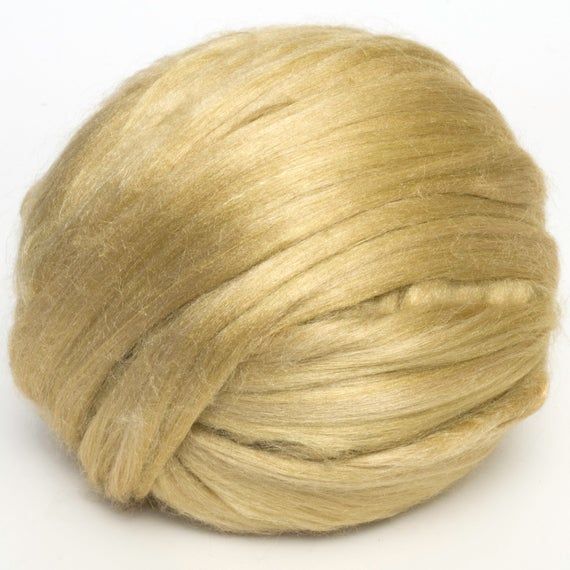
Assam is the only place in the world that produces Muga silk, a rare silk with a natural golden sheen that becomes glossier with each wash. Traditionally worn by Assamese royalty, Muga silk is used to create elegant mekhela chadors, sarees, and shawls. Its durability is unmatched, often lasting for generations as a family heirloom. Visitors to Assam can explore weaving villages like Sualkuchi—often called the “Manchester of the East”—where artisans still produce Muga silk on handlooms. Purchasing authentic Muga silk supports local artisans and preserves this centuries-old craft.
Handloom Villages & Weaving Traditions
The heart of Assam’s textile heritage lies in its rural weaving communities. Villages like Sualkuchi are renowned for their handloom clusters where Gamosa, Muga, and Eri silk are woven. Travelers can witness the rhythmic process of weaving, from rearing silkworms to spinning yarn and creating intricate patterns on traditional looms. Many homestays and weaving workshops allow visitors to try their hand at weaving or purchase directly from artisans—making it a truly immersive experience.


Festivals & Rituals Featuring Gamosa and Muga
The Gamosa plays a central role in Bihu, Assam’s most famous festival, where dancers wear it as part of their traditional attire. It is also presented as a token of honor in cultural programs and religious gatherings. Muga silk, on the other hand, is often worn during weddings, formal occasions, and community celebrations. These textiles are not merely clothing—they are woven expressions of Assamese pride, spirituality, and social connection.
Supporting Local Artisans
Choosing Gamosa and Muga silk as part of your Assam experience helps sustain rural livelihoods. Weaving is often the primary income source for many families, and the demand for authentic handloom products empowers women weavers, promotes fair trade, and preserves traditional skills. By purchasing directly from artisans or cooperatives, travelers contribute to the survival of Assam’s textile heritage in an increasingly mechanized world.

FAQs about Gamosa & Muga Silk
Q1. What is the cultural importance of Gamosa?
Gamosa represents respect, purity, and Assamese identity. It is used in festivals, religious rituals, and as a gesture of honor.
Q2. Where can I buy authentic Muga silk?
Sualkuchi, near Guwahati, is the best place to buy handwoven Muga silk directly from artisans.
Q3. Why is Muga silk so special?
Muga silk is unique to Assam, has a natural golden luster, and is extremely durable—often lasting for decades.
Q4. Are Gamosas handmade?
Yes, most Gamosas are handwoven on traditional looms, often featuring unique motifs passed down through generations.
Q5. Can travelers watch the weaving process?
Absolutely! Many weaving villages offer guided tours and workshops for visitors to learn about the process.
Q6. Is Gamosa recognized internationally?
Yes, the Gamosa has been recognized by UNESCO as an Intangible Cultural Heritage symbol of Assamese culture.
Exploring the Gamosa and Muga silk heritage is an unforgettable way to connect with Assam’s soul.
Whether you’re attending a vibrant Bihu festival, visiting the weaving town of Sualkuchi, or simply bringing home a handwoven souvenir, you’re becoming part of a centuries-old tradition. Make time during your Assam journey to witness these living crafts, meet the artisans, and celebrate the cultural pride that keeps Assam’s handloom story alive for future generations.
🧵 Plan Your Textile Heritage Journey